
Commercial Refrigeration in 2026: How to Stay Compliant
For years, California’s Air Resources Board (CARB) has set the pace for refrigerant regulation, forcing commercial refrigeration operators to adapt earlier than much of the country. As a refrigeration service provider operating in this regulatory environment, Classic Refrigeration has helped businesses interpret these rules, maintain compliance, and plan system upgrades as requirements evolved.
Now, as of January 1, 2026, the rest of the U.S. is catching up. New EPA regulations under the American Innovation and Manufacturing (AIM) Act create a unified—and in some cases stricter—national standard that will affect far more commercial refrigeration systems than ever before.
Part of the American Innovation and Manufacturing Act (AIM), the EPA’s HFC Management Rule ends the grace period for moving away from hydrofluorocarbon (HFC) gases like R-404A to CO₂—and, to a lesser extent, ammonia and propane. While some enforcement dates are up in the air as the EPA and DOE reconsider details amid industry concerns, these regulations are coming— and they’ll be affecting more businesses than ever, including many smaller businesses that previously avoided scrutiny.
How can you get ready? First, we’ll outline the major changes and how they may affect your business. Then, we’ll share three tips for weathering this regulatory storm.
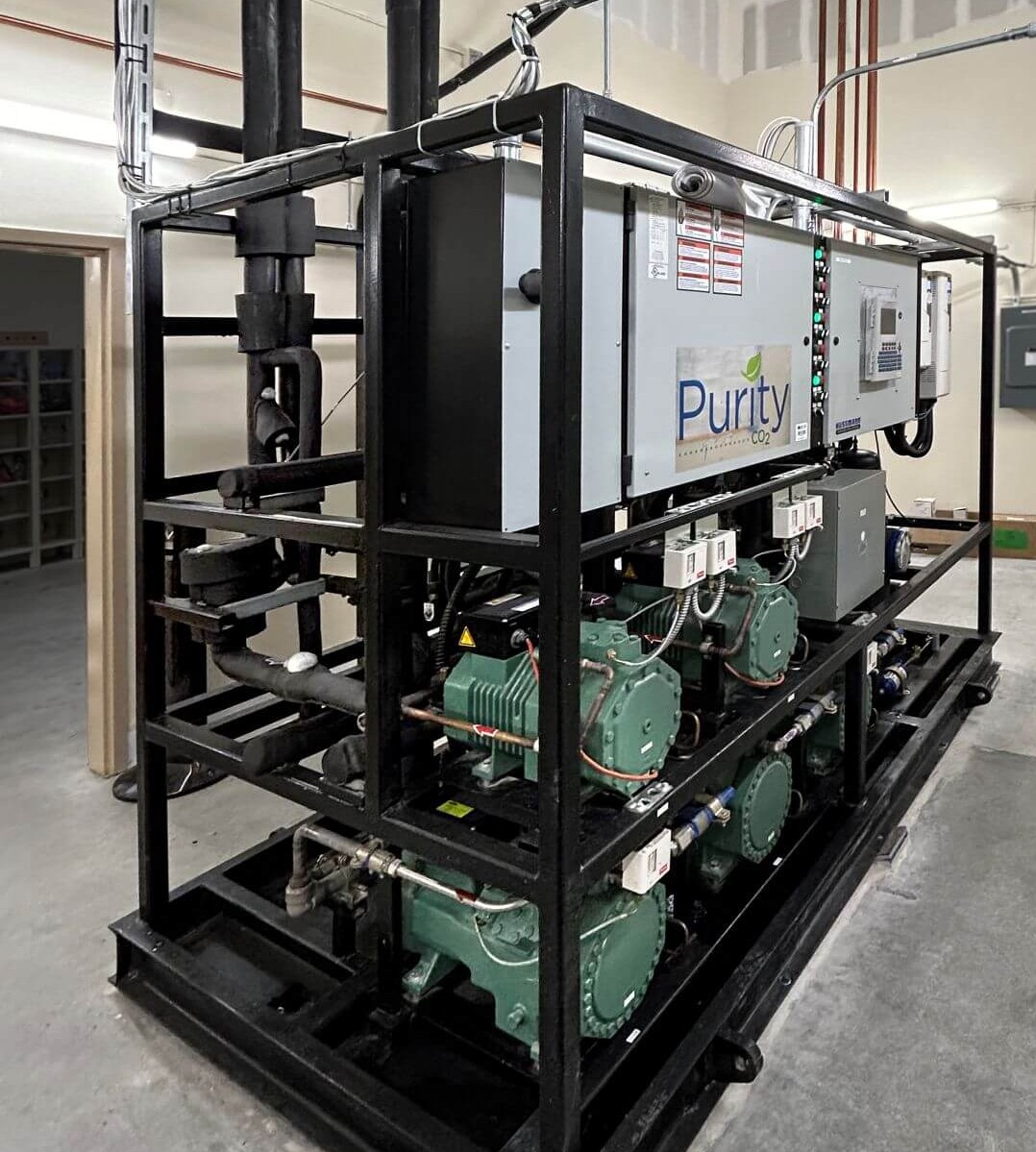
Quick technical note: Refrigerant regulatory rules are built around Global Warming Potential (GWP). The commonly used refrigerant R-404A, for example, has a GWP of 3,922, while CO₂ has a GWP of just one. This makes legacy refrigerant leaks particularly harmful. For the sake of simplicity in this article, we’ll refer to the high-GWP (53 or higher) refrigerants being regulated as HFCs and the low-GWP refrigerants as CO₂, which has emerged as the leading choice.
Big Change #1: Smaller Equipment Now Regulated
Federal leak repair rules were previously enacted on systems that contained 50 lbs or more of HFCs. Now, these same rules affect high-GWP systems that have just 15 lbs or more of these refrigerants. Smaller businesses with walk-ins, prep tables, pharmacy storage, remote condensing systems, and certain light commercial rooftop units (RTUs) will face the same strict federal rules as large supermarket and drug store chains.
Requirements: Companies must track leaks, repair units within 30 days, and maintain paper or digital records for three years. Technicians are federally mandated to provide invoices that include the amount of gas added and the calculated leak rate whenever they service a unit over 15 lbs. (California enforces a stricter 14-day repair window for any system over 50 lbs. And requires recordkeeping in its R3 online system.)
Consequences: Failure to maintain a service log or calculate a leak rate for a 15 lb unit can trigger federal fines of up to $69,733 per day. California fines range between $1,000-$10,000 per day past the 14-day repair window for larger systems, and can be increased dramatically if CARB determines the failure to repair was due to negligence or willful violations.
Big Change #2: Phasedown of Legacy Refrigerants Will Skyrocket Costs
Under the AIM Act, the federal government issues “allowances” (essentially rations) to limit new HFC production towards a goal of 85% reduction by 2036. This mandated scarcity drives up HFC prices to encourage businesses to switch to CO₂.
Reclaimed HFCs aren’t subject to these allowances, which created a loophole that enabled companies to add large amounts of virgin HFC gas to reclaimed gas in order to skirt phase-down allowances and avoid the expense and complexity of cleaning old gas.
Requirements: To close this loophole, the EPA is mandating that reclaimed gas contain no more than 15% new material. (Note that California has gone beyond rations and fully banned the sale of virgin bulk HFCs.)
Consequences: Non-compliant gas found in a business’s inventory can be seized without compensation, leaving owners with a broken system and deep financial losses. The more common effect will be costs. Repairs for HFC systems may rise 3x or more due to HFC scarcity (https://ww2.arb.ca.gov/rulemaking/2020/hfc2020), potentially exceeding the value of some equipment. Additionally, it will be difficult to source the gas needed to repair leaks, which could lead to longer downtime and lost inventory costs.
Big Change #3: Automatic Leak Detection Required for Larger Systems
It is now federally mandated for all high-GWP systems with more than 1,500 lbs of charge to have Automatic Leak Detection (ALD). These are the type of systems used in large supermarkets, cold storage and distribution, biotech and pharmaceutical manufacturing, and food processing.
Requirements: New systems are required to have 24/7 ALD by January 1, 2026, while owners of existing systems have until January 1, 2027, to retrofit their systems with ALD. All of these systems are subject to the same leak repair timelines and reporting requirements.
Consequences: Operating a 1,500 lb+ system without a certified ALD after the deadline can result in penalties starting at $250 per piece of equipment but can quickly scale into the thousands if a leak occurs that the system should have caught.
Other 2026 Regulatory Changes in California and Beyond
Additionally, CARB is enacting several more rules:
- By December 31, 2026, any company owning 20 or more retail food facilities must reach a weighted-average GWP of <2,500 across all stores.
- All systems with ≥ 50 lbs must be registered in California’s Refrigerant Management Program (R3).
- SB 253 requires $1B+ companies that do any business in California to report Scope 1 and 2 emissions, which includes all refrigerant leaks. SB 261requires $500M+ companies to disclose financial risks due to climate change, which could include the costs associated with running and replacing older refrigeration systems.
And while we have been focusing on federal and California rules, other states are working on similar regulations, most notably:
- Washington State’s Department of Ecology is enacting registration deadlines in March 2026 for medium facilities (200-1,499 lbs.).
- New York is requiring a near-zero GWP of <10 for almost all new commercial refrigeration installations, effectively transitioning away from HFC.
It’s also important to note that regulatory enforcement timelines and interpretations may evolve as agencies finalize guidance.
Action Plan: What Should You Do Next?
This is a heady amount of regulation to keep up with, especially if you run a small business that hasn’t yet faced refrigerant regulation. But regardless of business size, no one wants to experience critical equipment failure only to learn the refrigerant you need isn’t available or is prohibitively expensive, or to face fines for mishandling reporting or leak repair requirements.
What can you do to survive the regulatory restrictions as the industry shifts to cleaner refrigerants?
- Conduct a "15-lb Audit" immediately. Identify every unit in your facilities that holds at least 15 lbs of gas so you can bring them into your tracking system.
- Digitize service logs now. Move away from paper invoices and use a digital tracking tool to ensure every refrigerant addition includes the federally mandated leak-rate calculation. While federal requirements do allow paper reporting, moving to digital tracking will streamline this work.
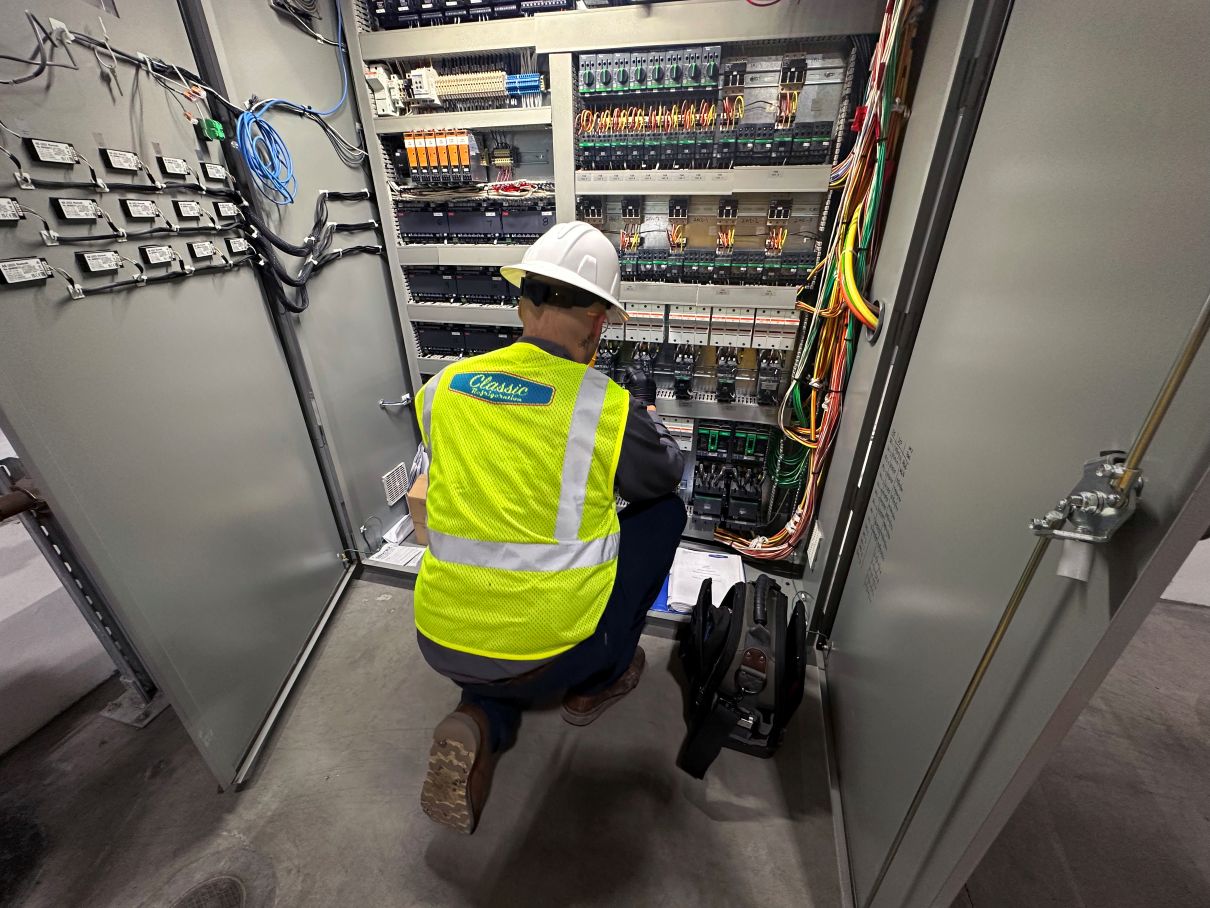
3. Find a regulation-ready HVAC-R service partner. A maintenance service that just keeps the lights on by continually fixing older equipment is no longer enough. You need refrigeration experts with knowledge that spans older equipment, new CO₂ systems, and how to cost-effectively transition between them. They should be able to assist with regulatory record-keeping, as well as be responsive when you’re dealing with a leak or other malfunction.
The fastest way to avoid fines, downtime, and unexpected costs is to understand where your refrigeration systems stand before enforcement begins. Classic Refrigeration helps businesses identify regulated equipment, implement compliant tracking processes, and develop long-term strategies for operating in a low-GWP future. Whether you’re managing a handful of systems or a large, complex facility, our team can help you prepare with confidence.